Share this article
‘Blue Monday’ was first coined by UK holiday company Sky Travel and refers to the third Monday in January – supposedly the most depressing day of the year.
It’s often discussed as a light-hearted way to explain the January blues.
But in personal injury cases, psychological harm is serious, lasting, and deserving of far more care than a catchy label.
Read on as we discuss why Blue Monday doesn’t tell the full story of mental health.
The truth about Blue Monday
We can all relate to the January slump. Christmas is finished, pay day is ages away, and the weather is horrendous. It’s understandable that we might look for ways to cheer ourselves up.
But many companies use Blue Monday as an incentive to get us to spend money. Travel and event marketing seems to be ramped up.
At Gildeas, we support people dealing with the long-term impact of injury, trauma and loss. That’s why we’re cautious about a campaign that risks trivialising mental health for the sake of marketing.
The so-called most depressing day of the year was invented by Sky Travel in 2006 – but there is no scientific evidence or truth to support the idea that we’re all more likely to feel low on this particular day of the year.
Why we believe personal injury solicitors should boycott Blue Monday
Mental health challenges can be complex, and Blue Monday risks trivialising people’s very real emotions to sell stuff. Life – especially after an accident – can be hard enough without negative mental health stereotypes like this.
Accidents, whether road traffic accidents, workplace injuries, or slips and falls, can leave lasting scars – both physically and mentally.
Many of our clients seek support from Gildeas having experienced a traumatic accident or life event, and some may go on to receive a specific diagnosis.
Below are just some of the conditions often seen in personal injury cases.
- Anxiety and depression
- Trauma-related psychological injuries and PTSD (Post-traumatic stress disorder)
- Adjustment disorders
- Somatic symptom disorders
Mental health doesn’t follow a calendar
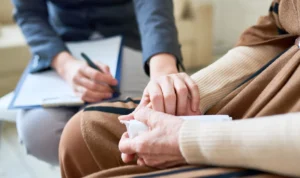
When it comes to your mental health after an accident, the reality is – we all have our good days and bad days, and we can’t control whether a bad day might occur in January, February, or any other day.
While it’s true January can be a difficult month for us all, we see the lasting impact accidents have on people every day. Mental health challenges don’t appear on a single day like Blue Monday, and they don’t disappear when January ends.
Thankfully, there’s a wealth of support available to help you navigate the psychological challenges following an accident – whether it be through the NHS, charities, or private services.
This Blue Monday – and on any day – we encourage anyone impacted by injury to reflect on their wellbeing, reach out for support, and know that you don’t have to face the process alone.
Your story matters, and we’re here to listen.
If you or a loved one is suffering, don’t hesitate to contact us for support.
Useful links for mental health support:
How to access specialised NHS mental health services in Scotland
Charities:
Scottish Action for Mental Health (SAMH)
Claim smarter.
Get your FREE guide to personal injury claims!
More from Gildeas:
What Happens Next In Your Personal Injury Claim
Gildeas Solicitors is a recognised law firm specialising in personal injury claims, supporting you throughout Scotland from our offices in Glasgow and Edinburgh. We’re passionate about what we do, whilst putting our clients’ interests first. That’s why we make personal injury personal.
Considering our services? Call our dedicated team today on 0141 331 6070.