Share this article
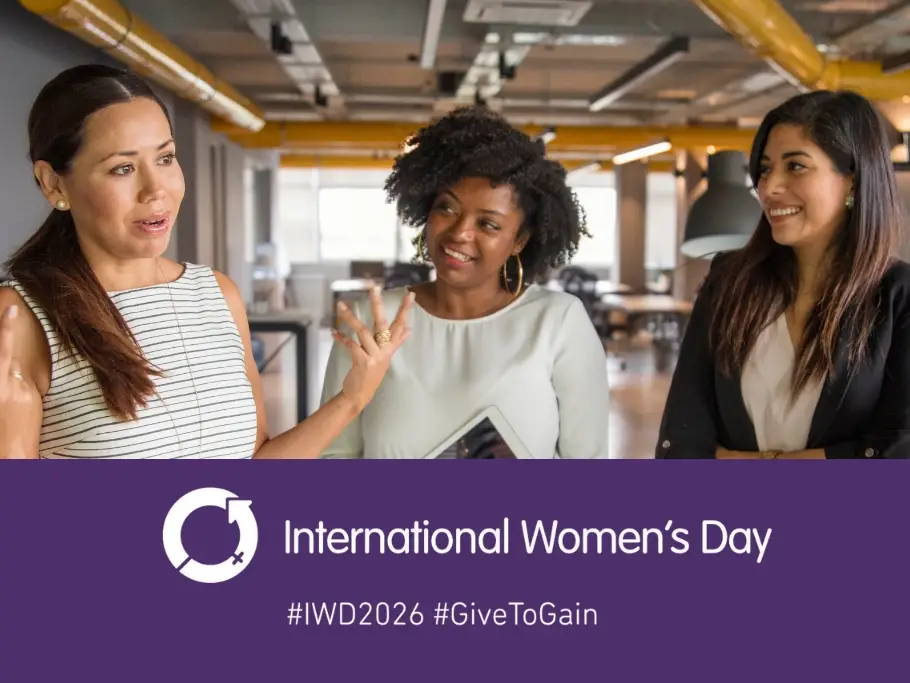
International Women’s Day is a time to reflect on progress, but also to look ahead.
Last year, we shared an interview with our Directors, Emma Thomson and Lindsay Hare, on their journeys into leadership and experiences as women in law. This year, we’re turning the focus to the next generation.
The legal profession has changed. More women than ever are starting traineeships in Scotland. But numbers alone don’t tell the full story.
We spoke to four of our trainee solicitors, Lile Martin, Sophie McGuinness, Anisah Qureshi, and Ailie Brown about why they chose law, the challenges they still see, and what needs to happen next.
Their answers are honest, thoughtful, and hopeful. They show how far we’ve come, and why there is still work to do.
Q1: How did you come to decide on pursuing law as a career?
LM: Slightly cliched, but – Legally Blonde! I remember watching it when I was young with my mum. It opened my eyes to the world of law and the idea of strong female characters in a male-dominated industry.
I’m the first in my family to go to university and I don’t have any family in the legal industry, so there was definitely some doubt throughout. From when I was quite young, law was something I’d decided myself, but I always had continued support from my mum and dad – they always were there to help me.
When I eventually started my traineeship, the gift that I got from my parents was a bracelet engraved with a quote from Legally Blonde!
SM: To be honest, I’d wanted to be a lawyer since I was about 11 or 12. I was already looking at universities in first or second year of secondary school! My mum worked at a university, so I was looking at it from a young age.
I was always interested in social subjects and English – they were my strongest subjects, and when I was looking at careers, I naturally gravitated towards law.
No one in my family is a lawyer, I was the first. The older I got, the more certain I got that I wanted to do it. I never really wanted to do anything else. And it was always – not just to study law, but to become a practising solicitor.
AB: All the things I was interested in pointed to law. It was definitely my own decision, but I was always encouraged by my teachers and things like that.
I was the first in my family to do law, I didn’t have access to any networks, so it was something I came to on my own as well.
AQ: No one in my family is a solicitor, they’re mostly in medicine. So me doing something different was a bit unprecedented! Everyone was expecting me to study medicine, but it just wasn’t for me.
I didn’t know I wanted to pursue a career in law when I was a kid, but I knew I wanted to do something that was rooted in purpose.
I’ve always found law a really interesting area – there’s so many parts to it. You don’t realise the impact – society is structured on it. That’s what holds everything together. I found that interesting because it intersects into so many different areas of life.
When I was younger, I used to a lot of volunteering – in the local library, and with the Citizen’s Advice Bureau – that was my taster of it. And then I decided to pursue it at uni and went on from there.
Q2: Do you have a role model who influenced you to choose law, and can you tell me a little bit about them if so?
LM: Madge Easton Anderson.
She was the first ever woman to be admitted to practice and qualify as a lawyer in Scotland in 1920. This was after the introduction of the Sex Disqualification Removal Act passed in 1919.
That Act meant women were allowed to enter into the legal profession, which overruled a previous Court of Appeal judgment called Bebb vs the Law Society in 1914. That judgment upheld a tradition of the Law Society refusing to allow women to take qualifying law exams.
So it’s obviously really influential that she was the first woman after the passing of the Act, and so soon after as well.
SM: Definitely my mum. [Sophie’s mum holds a PhD and is a former university lecturer. She has regularly published research in nursing and midwifery studies.]
My mum has achieved so much academically. I don’t know how she did it with 3 kids and everything that comes with being a parent.
I watched her do that – obviously supporting her where I could. But she was always so encouraging. Although she’s from a healthcare background – it was helpful having that understanding of how university worked.
She understood when you were struggling with your dissertation and those kinds of things. Every essay I’ve ever written, every application, jobs – she’s helped me through everything, so she’s a major role model.
And obviously she’s been successful – if I can be half as successful as her, I’ll be doing well!
AB: I’m not sure if I particularly did! I was encouraged a lot by my parents. As I said – I was the first in my family to do law. My mum always said to “Do the best you can.” – and that’s what I’ve always done.
AQ: When I was a kid, I used to read a lot. I was influenced by one of the main characters in A Series of Unfortunate Events – Violet Baudelaire. [The character is a young inventor who survives life-threatening situations.]
I loved her analytical and problem-solving skills and how she solved problems under extreme pressure. She’d be in crazy situations and just tie her hair up! I wanted to be like that – to use my problem-solving skills and be a leader – to think my way out of situations, be determined and persevere through things.
I was influenced by a lot of books. I think media and literature can influence you a lot when you’re younger and still forming your own ideas. It can mould the kind of person you want to be.
Q3: According to the Law Society of Scotland, there were 796 new Traineeships commenced in Scotland in 2024/25 – the majority of which are women.
As there are now less barriers to accessing the industry, what do you think are the biggest challenges facing young women in law over the next few years?
LM: There were quite a lot of unknowns with things like uni applications and work experience, I didn’t have access to any of that advice. My work experience placements were ones I found myself; I didn’t have any connections at all. I was just trying to do what I could to get where I wanted to be.
There are very limited spaces to begin traineeships and it’s super competitive.
But one thing that came to mind is the use of AI in the industry. I know that’s a threat to everyone, not just women. For example, when we’re doing CPD training – there is a fine line between using AI to your advantage, and then not allowing it to be used as a replacement for your whole job.
SM: Yeah, I never felt there were many barriers. During my studies, the majority in my year were women. I never thought access was an issue there – it’s further up. When you’re looking at senior roles, there are more men. I think it’s a lingering thing from previous generations.
But I think it’s getting better. There are more women coming into the profession – and that’s well-known – so I think in years to come, there will be more women in senior positions. It’ll level out gradually.
AB: Whilst the barriers are down and there’s better access, it is difficult. The jobs and traineeships just aren’t there. For example when I was at uni – I didn’t find out until much later about the opportunities available, around my third year.
So whilst more women are coming into the industry, I think it’s still common for them to be the first in their family to go into law – compared to those in the past, particularly older men who might be more likely to know someone and found it easier.
AQ: A lot of my friends who are women from uni, they want to be Solicitor Advocates. They loved our advocacy classes. But it’s being able to see that representation in the future. I think the challenge now is to see the retention – seeing women progress from traineeships to more senior roles.
It’s really important to see that long-term representation. A lot of those senior roles still feel male-dominated, so it’s really important to see women pursuing those and see that representation in Court.
To be able to create an environment where – not only do women join the profession, but they feel like they can stay and grow and lead within it.
Do you think it’s important for you to see that pathway?
It’s so important to see. I was thinking of [Gildeas Directors, Lindsay Hare and Emma Thomson] because at one point, they were trainees and they’re now Directors. It’s so important for the new generations to see coming in.
Hopefully for the kids in school right now – by the time they get to a stage where they realise they want to do law – if they see more women in senior roles – then that’s a point of inspiration for them.
______________________________________________________________________________________________________________________________________________________________________________
Stay tuned as Part 2 will be released later this week.
This interview was compiled by Samantha Upton, Marketing Manager.
Gildeas Solicitors is a recognised law firm specialising in personal injury claims, supporting you throughout Scotland from our offices in Glasgow and Edinburgh. We’re passionate about what we do, whilst putting our clients’ interests first. That’s why we make personal injury personal.
Considering our services? Call our dedicated team today on 0141 331 6070.