

Credit Hire in Personal Injury Claims: How It Works And What to Expect
Share this article
After a car accident, one of the first concerns many drivers face is losing their car.
At Gildeas Solicitors, we understand that after an accident, getting moving and back to your day to day is absolutely critical.
Credit hire services can be a way of solving this problem, offering a temporary vehicle without any expensive upfront costs. But while this service is vital, credit claims need to stand up to being scrutinised in court.
Read on as we explain the key points you need to know.
What is credit hire?
Credit hire is not a company car.
If your vehicle was damaged or written off due to an accident that wasn’t your fault, instead of going to your insurers, you might choose a credit hire company.
They will supply you with a vehicle on a ‘credit’ basis (i.e., a loan) whilst yours is being repaired, or if it’s written off.

What are the benefits of credit hire?
- The innocent person involved in a road traffic accident doesn’t need to make a claim on their insurance and pay an excess – which can be expensive, depending on your policy.
- In most situations, there is no upfront cost. This makes it an attractive option for people who can’t afford to lose their vehicle, or who can’t afford the expense of an alternative.
- A replacement vehicle from a credit hire company usually arrives more quickly than one from your insurers.
- Credit hire companies sometimes have additional benefits, e.g., the company pay to clean the car whilst you have it, or they might give you a small payment towards fuel.
- Credit hire companies also tend to have a larger source of vehicles, so you’re more likely to get a similar vehicle to your own.
How does credit hire work?
Most personal injury solicitors work in partnerships with credit hire companies to offer this service.
You’ll be asked to sign a credit hire agreement with a credit hire company before receiving the replacement vehicle.
The costs of hiring a vehicle are factored in as a part of your claim and recovered from the insurance company of the driver you’re making a claim against.
Key points in proving a credit hire claim:
It’s your solicitor’s responsibility to justify to the court why you needed to hire a vehicle.
That’s why it’s essential that you give accurate information to your solicitor and the credit hire company. You should check both the agreement and their T&Cs before you sign anything.
If your solicitor can’t 100% prove why you needed a hire vehicle, this part of your claim could fall through.
Unfortunately, by law this means that you are then responsible for the costs of hiring the replacement vehicle.
Mitigating your losses in credit hire claims
In personal injury law, there’s a rule which means that when making a claim, you still have a responsibility to make sure any losses you’ve incurred are as minimal as possible – whether it was financial, your injuries, or otherwise.
This is called mitigating your losses and it also applies to credit hire claims. Your solicitor will need to prove to the court why the credit hire costs were reasonable, for example:
Duration:
Even if your solicitor can prove that you 100% needed to hire a vehicle, they also need to justify if the length of time it was hired for was reasonable. If there are unnecessary delays, this could be picked up on by the other side.
Vehicle hire rates:
The court decides on how much of the hire costs to award you. It usually makes this decision based on your income. It’s your solicitor’s job to provide evidence about this. For example, if you couldn’t afford to pay the upfront costs for a hire car, then the court is more likely to award you the full hire costs. The legal term for this is “impecunious”.
But if you had plenty of cash coming in or significant savings in the bank, the court would expect you to have footed the bill to hire a replacement car. This is called being “pecunious”. Being pecunious means you might only be awarded a basic hire rate, or worse – this part of your claim can fall through.
What can I expect if I make a credit hire claim?
If you take up this service, you’ll probably be faced with questions from your solicitor like:
- Why do you use your car – for work, commuting, etc?
- Was there another family car available to you?
- Could you have paid for a hire car with your own money?
- Could you have paid for repairs to speed up the process?
Your solicitor will ask you for evidence to explain your situation, e.g., bank statements.
It sounds daunting but, with your help and co-operation, your solicitor will likely be able to resolve the matter in an efficient manner.
When should I use credit hire?
You should take advice from your solicitor. A good solicitor can inform you when you can use credit hire, and when you might not be eligible.
In conclusion, credit hire is a necessary service – but it must be fair, reasonable and be able to stand up in court when scrutinised by the other side.
Our credit hire team deal with hundreds of individuals and businesses alike in credit hire claims.
So, if any of the above sounds familiar to you and you need some help, please contact our specialist personal injury lawyers today.
If you or a loved one is suffering, don’t hesitate to ask for support.
Claim smarter.
Access our free how-to guide on making a personal injury claim.
Jargon free and designed for you.
More from Gildeas:
- Impecuniosity: The Little Known Legal Principle That Could Increase Your Compensation
- Mitigation: Could You Lose Out On Compensation Without Realising It?
- Maximising Your Compensation: A Step by Step Guide
- FAQs
Gildeas Solicitors is a recognised law firm specialising in personal injury claims, supporting you throughout Scotland from our offices in Glasgow and Edinburgh. We’re passionate about what we do, whilst putting our clients’ interests first. That’s why we make personal injury personal.
Considering our services? Call our dedicated team today on 0141 331 6070.
More to explore







As A Lawyer For Injured Motorcyclists, This is the Conversation Riders Avoid
Share this article
After years representing injured riders, Stephen Hay knows how quickly a single accident can lead to a traumatic brain injury.
In this guest blog for Brain Injury Awareness Month, he explains the lasting impact these injuries can have and why early support matters.
March is the first month of Spring, but also the time that seasonal bikers start to dust off their kit and get back out on their bikes.
As the year goes on the sound of motorcycle engines becomes more noticeable for the next 6 months or so.
It’s also at this time of year that Gildeas receives more contact from bikers and their families seeking assistance when they have been involved in an accident.
All too often, despite the protection afforded by modern helmets – brain injuries are suffered.
Traumatic brain injuries
No longer does the medical profession note someone was unconscious for a brief period. This is now considered a Traumatic Brain Injury.
With increasing medical knowledge, the immediate impacts of such an injury are now being identified – as are the possible impacts in later life.
Brain injuries of course are not only the preserve of motorcycle accidents. They can also arise from bicycle accidents, pedestrian accidents and workplace accidents. No matter the cause – the impact can be significant.
Such injuries can lead to memory or cognitive loss, reduced concentration and problem solving, personality changes, fatigue, speech issues, loss of co-ordination and mental health issues.
As a consequence, these injuries can have wide ranging impacts on all aspects of life. Employment will no doubt be impacted, as will relationships with family members and friends.
How Gildeas assist with traumatic brain injury
This is why we at Gildeas work closely with rehabilitation providers to try and secure early rehabilitation – as this is shown to provide the best long term outcome.
In the same way that soft tissue can be damaged and needs physiotherapy, we have clear relationships with trauma-informed specialists who provide physiotherapy for the brain, known as neuro-physiotherapists.
They work with the injured person to assist them in getting back as much of their previous abilities as possible.
We understand the issues that arise from brain injuries and the losses that can arise. The Scots Law of damages will put you back in the position you would have been in but for the other side’s fault and negligence – insofar as money can.
Therefore, if your career is affected by the injury and you will not earn as much as you would have had the accident not happened – the difference is recovered. If as a result your pension will be lower – the difference is recovered.
If you will need help with daily tasks – the cost of this is recovered. These losses are losses we would seek to minimise through early treatment and rehabilitation.
Meaning you return as close as possible to the person you were before the accident.
In conclusion
Our experience in dealing with brain injuries allows us to identify the issues and provide solutions.
Every person is different and every person reacts differently to injuries.
We make personal injury personal because nobody goes through what you go through.
_________________________________________________________________________________________
Claim smarter.
Get your FREE guide to personal injury claims!
Gildeas Solicitors is a recognised law firm specialising in personal injury claims, supporting you throughout Scotland from our offices in Glasgow and Edinburgh. We’re passionate about what we do, whilst putting our clients’ interests first. That’s why we make personal injury personal.
Considering our services? Call our dedicated team today on 0141 331 6070.
More to explore

International Women's Day 2026: From Trainees to Leaders in Law
Share this article
International Women’s Day is a time to reflect on progress, but also to look ahead.
Last year, we shared an interview with our Directors, Emma Thomson and Lindsay Hare, on their journeys into leadership and experiences as women in law. This year, we’re turning the focus to the next generation.
The legal profession has changed. More women than ever are starting traineeships in Scotland. But numbers alone don’t tell the full story.
We spoke to four of our trainee solicitors, Lile Martin, Sophie McGuinness, Anisah Qureshi, and Ailie Brown about why they chose law, the challenges they still see, and what needs to happen next.
Their answers are honest, thoughtful, and hopeful. They show how far we’ve come, and why there is still work to do.
Q4: Do you think there are any old-fashioned or traditional ideas across the industry lingering on?
AB: One thing I’ve noticed is when we’re appearing at Court, or when we’re joining a virtual Court appearance – the default greeting to the Sheriff is “M’Lord”, which is obviously assuming you’ll be speaking to a man.
But there are more female Sheriffs now so a lot of the time it’s a woman. You end up seeing some of the older male solicitors going, “Oh, sorry – I mean, “M’Lady!”.
With more women coming into the industry, that shouldn’t be the default – it shouldn’t be the default for me. Hopefully by the time I’m later in my career, it will be more 50/50.
AQ: Although there’s more women coming into it, it can still seem quite male-dominated. A lot of senior roles – Sheriffs and things. I hope that young women can feel they’re welcomed into the profession.
There is wider access now, but there’s still opportunities that come from personal connections and who you know, rather than your intelligence or what you know. So for young women who might come from a family where they don’t have established networks, that can feel like an extra barrier they have to overcome.
We need to continue to challenge that idea, the ‘traditional’ pathway. You don’t need to enter the legal profession through people you know.
When I was at uni for instance, there were times where I felt imposter syndrome because I didn’t have family who were high up lawyers. There was an extra step. I think it’s important to continue with widening access because the legal industry also benefits from that – the importance of reflecting all these different experiences and perspectives. And letting people who don’t come from the posher schools or families that you can do this. You’re more than capable of entering that pathway. Law is seen as quite an established profession – so it’s important for young women to know that they’re more than capable.
Even though you’re not at the same starting point as others – it’s not about that. It’s about your skills, your determination. You can do this. Don’t feel intimidated by the profession because it can be that way already – if you’re doing court work or you’re speaking to Advocates or Sheriffs for example. It can feel a bit overwhelming.
SM: A lot of people on my course, they all had connections or relatives. So, they were clued up on training contracts or summer placements that I just wasn’t aware of until later on when everyone became aware of them.
I remember in Freshers week – we were only told about the diploma in one seminar. Then it wasn’t mentioned again until our fourth year. So, you had this huge amount of time where opportunities passed and the deadlines are too late – but obviously people who have family in the law profession, they were aware of these things.
But I’ve always had positive experiences from people in a senior position. I think where I get treated differently is the fact that I’m a younger female solicitor and early in my career. Sometimes you do feel like you’re not taken as seriously as say, an older male colleague.
Maybe more so with clients – but there still seems to be an ‘authority’ attached to older men in the profession – although it could purely be because I’m early on in my career. Other than that, I’ve had overwhelmingly positive experiences.
AQ: All of the Sheriffs are really nice! But sometimes you hear a story that’s negative where you’re treated differently to your male counterparts. I’ve heard of colleague’s experiences with male clients who were rude, or even that they requested to speak to a male solicitor.
You’re not ‘picked on’ because you’re a woman, but you hear of things happening. The odd time you’re treated differently. But we’ve all made it – we’re in the same place. You shouldn’t be treated differently.
LM: I think the narrative that women who decide to have children then can’t be in senior, or managerial/Director roles is very outdated in the legal industry.
I think statistically in the past, women have “fallen behind” by having those stereotypical caring responsibilities because they decided to have kids.
With that being said, Gildeas does very well at having a senior team that’s more representative of an equal split of genders. It’s very equal in terms of male and female solicitors and Directors. Gildeas does a great job of having that representation.
It’s great that the choice to have a family hasn’t been a restriction on women here. But across the profession in general, that idea that women who choose to have a family won’t make it to more senior roles.
AB: It’s been amazing to have that pathway shown to us by [Gildeas Directors, Emma Thomson and Lindsay Hare, and Senior Solicitor, Kyanna White]. Kyanna, Emma and Lindsay are great – I feel like I could go to them with anything, and I’d hope others can feel the same.
Q5: The theme for International Women’s Day this year is ‘Give to Gain’, emphasising how powerful support can be.
With the aim of continuing progress for women in law, are there any support mechanisms you would you like to see?
LM: Continuing to create those clear pathways and continuing to remove barriers to progression. So that could look like putting in reasonable adjustments where necessary for issues that impact women – for example things like the menopause, or endometriosis.
And things like continue to promote inclusive workplace cultures.
AB: Definitely the flexibility over the last few years has helped in being able to balance having both a family and a career. For instance, I plan on doing both.
We should be able to have that option. It shouldn’t stop you from progressing in your career just because you’re a woman.
So I’d like to see things like that continue, for example introducing more flexibility or time off for things like periods or the menopause. I’ve seen that recognised in places like Scandinavian countries.
SM: A big one is guidance on how to progress. Speaking from the trainee perspective, there’s so much information given to you throughout university on how to get through your diploma, how to get a traineeship, etc. Then you have development and regular reviews.
But in terms of progression once you qualify, things you could do to stand out, or how to get to Partner, Associate, or Director level – that would be helpful to have guidance on how to progress. Like the things you can do that might be a bit more niche, or above the normal standard to get you where you want to be. The knowledge I have is only what I’ve experienced – other than doing my job, I don’t know what else I should be doing to make sure I’m not plateauing.
Obviously, Emma and Lindsay have been successful so we’re lucky that we can ask them. But if they weren’t here, I don’t really know where we would look. I don’t know where we’d get those resources. That’s a barrier I think to progression.
AQ: That theme – Give to Gain – is really important. Particularly for those who might not see that they have a pathway into the profession. Showing those that don’t have those networks or connections to get into the legal industry – it shows that they can be supported, and it creates a more inclusive environment for them. So I’d like to be able to see more of those initiatives.
The Law Society have a project called the Street Law programme I was involved with when I was at uni. It’s a widening access programme – you visit schools and talk to kids who are interested in pursuing law as a career. They gave us topics, like contract law for example – and we’d visit a class, they’d ask us questions. Things like that – mentor programmes are really important. So seeing someone similar to you who’s established a career in it, it’s really inspiring to be able to see that. It plants those seeds and nurtures it because they might not have thought before that they could do it
I was speaking about this with a colleague – when you lodge something with the Court and you have to write ‘Dear Sirs’.
That’s a big topic right now.
But the Law Society have put guidance out to say ‘Good Morning’ or ‘Good Afternoon’ is acceptable now. But – that’s only a recent change.
It’s getting rid of that idea that we’re limited to one role. You want to feel like we get the same opportunities. We shouldn’t be limited just because we’re women. Seeing more women Advocates, even on Court rolls – just being able to access all those areas and opportunities.
Hopefully that’s something that’s going to change in the future with my generation, or the next generation. I’d love to see that we can pursue those senior roles and have the next generation see that.
Conclusion
There’s a clear message running through every answer.
Access is improving and representation is growing. But progression, visibility, and support are still fundamental.
For our trainees, success doesn’t just look like getting a foot in the door. Staying, growing and leading is what it’s all about.
Their goals? Making sure the next generation can see a place for themselves in the profession.
This International Women’s Day, the theme is ‘Give to Gain’. Their stories show exactly why this theme is more relevant than ever. When women are supported, the whole profession benefits.
______________________________________________________________________________________________________________________________________________________________________________
This interview was compiled by Samantha Upton, Marketing Manager.
Gildeas Solicitors is a recognised law firm specialising in personal injury claims, supporting you throughout Scotland from our offices in Glasgow and Edinburgh. We’re passionate about what we do, whilst putting our clients’ interests first. That’s why we make personal injury personal.
Considering our services? Call our dedicated team today on 0141 331 6070.
More to explore

International Women's Day 2026: Why the Future of Law Is Female
Share this article
International Women’s Day is a time to reflect on progress, but also to look ahead.
Last year, we shared an interview with our Directors, Emma Thomson and Lindsay Hare, on their journeys into leadership and experiences as women in law. This year, we’re turning the focus to the next generation.
The legal profession has changed. More women than ever are starting traineeships in Scotland. But numbers alone don’t tell the full story.
We spoke to four of our trainee solicitors, Lile Martin, Sophie McGuinness, Anisah Qureshi, and Ailie Brown about why they chose law, the challenges they still see, and what needs to happen next.
Their answers are honest, thoughtful, and hopeful. They show how far we’ve come, and why there is still work to do.
Q1: How did you come to decide on pursuing law as a career?
LM: Slightly cliched, but – Legally Blonde! I remember watching it when I was young with my mum. It opened my eyes to the world of law and the idea of strong female characters in a male-dominated industry.
I’m the first in my family to go to university and I don’t have any family in the legal industry, so there was definitely some doubt throughout. From when I was quite young, law was something I’d decided myself, but I always had continued support from my mum and dad – they always were there to help me.
When I eventually started my traineeship, the gift that I got from my parents was a bracelet engraved with a quote from Legally Blonde!
SM: To be honest, I’d wanted to be a lawyer since I was about 11 or 12. I was already looking at universities in first or second year of secondary school! My mum worked at a university, so I was looking at it from a young age.
I was always interested in social subjects and English – they were my strongest subjects, and when I was looking at careers, I naturally gravitated towards law.
No one in my family is a lawyer, I was the first. The older I got, the more certain I got that I wanted to do it. I never really wanted to do anything else. And it was always – not just to study law, but to become a practising solicitor.
AB: All the things I was interested in pointed to law. It was definitely my own decision, but I was always encouraged by my teachers and things like that.
I was the first in my family to do law, I didn’t have access to any networks, so it was something I came to on my own as well.
AQ: No one in my family is a solicitor, they’re mostly in medicine. So me doing something different was a bit unprecedented! Everyone was expecting me to study medicine, but it just wasn’t for me.
I didn’t know I wanted to pursue a career in law when I was a kid, but I knew I wanted to do something that was rooted in purpose.
I’ve always found law a really interesting area – there’s so many parts to it. You don’t realise the impact – society is structured on it. That’s what holds everything together. I found that interesting because it intersects into so many different areas of life.
When I was younger, I used to a lot of volunteering – in the local library, and with the Citizen’s Advice Bureau – that was my taster of it. And then I decided to pursue it at uni and went on from there.
Q2: Do you have a role model who influenced you to choose law, and can you tell me a little bit about them if so?
LM: Madge Easton Anderson.
She was the first ever woman to be admitted to practice and qualify as a lawyer in Scotland in 1920. This was after the introduction of the Sex Disqualification Removal Act passed in 1919.
That Act meant women were allowed to enter into the legal profession, which overruled a previous Court of Appeal judgment called Bebb vs the Law Society in 1914. That judgment upheld a tradition of the Law Society refusing to allow women to take qualifying law exams.
So it’s obviously really influential that she was the first woman after the passing of the Act, and so soon after as well.
SM: Definitely my mum. [Sophie’s mum holds a PhD and is a former university lecturer. She has regularly published research in nursing and midwifery studies.]
My mum has achieved so much academically. I don’t know how she did it with 3 kids and everything that comes with being a parent.
I watched her do that – obviously supporting her where I could. But she was always so encouraging. Although she’s from a healthcare background – it was helpful having that understanding of how university worked.
She understood when you were struggling with your dissertation and those kinds of things. Every essay I’ve ever written, every application, jobs – she’s helped me through everything, so she’s a major role model.
And obviously she’s been successful – if I can be half as successful as her, I’ll be doing well!
AB: I’m not sure if I particularly did! I was encouraged a lot by my parents. As I said – I was the first in my family to do law. My mum always said to “Do the best you can.” – and that’s what I’ve always done.
AQ: When I was a kid, I used to read a lot. I was influenced by one of the main characters in A Series of Unfortunate Events – Violet Baudelaire. [The character is a young inventor who survives life-threatening situations.]
I loved her analytical and problem-solving skills and how she solved problems under extreme pressure. She’d be in crazy situations and just tie her hair up! I wanted to be like that – to use my problem-solving skills and be a leader – to think my way out of situations, be determined and persevere through things.
I was influenced by a lot of books. I think media and literature can influence you a lot when you’re younger and still forming your own ideas. It can mould the kind of person you want to be.
Q3: According to the Law Society of Scotland, there were 796 new Traineeships commenced in Scotland in 2024/25 – the majority of which are women.
As there are now less barriers to accessing the industry, what do you think are the biggest challenges facing young women in law over the next few years?
LM: There were quite a lot of unknowns with things like uni applications and work experience, I didn’t have access to any of that advice. My work experience placements were ones I found myself; I didn’t have any connections at all. I was just trying to do what I could to get where I wanted to be.
There are very limited spaces to begin traineeships and it’s super competitive.
But one thing that came to mind is the use of AI in the industry. I know that’s a threat to everyone, not just women. For example, when we’re doing CPD training – there is a fine line between using AI to your advantage, and then not allowing it to be used as a replacement for your whole job.
SM: Yeah, I never felt there were many barriers. During my studies, the majority in my year were women. I never thought access was an issue there – it’s further up. When you’re looking at senior roles, there are more men. I think it’s a lingering thing from previous generations.
But I think it’s getting better. There are more women coming into the profession – and that’s well-known – so I think in years to come, there will be more women in senior positions. It’ll level out gradually.
AB: Whilst the barriers are down and there’s better access, it is difficult. The jobs and traineeships just aren’t there. For example when I was at uni – I didn’t find out until much later about the opportunities available, around my third year.
So whilst more women are coming into the industry, I think it’s still common for them to be the first in their family to go into law – compared to those in the past, particularly older men who might be more likely to know someone and found it easier.
AQ: A lot of my friends who are women from uni, they want to be Solicitor Advocates. They loved our advocacy classes. But it’s being able to see that representation in the future. I think the challenge now is to see the retention – seeing women progress from traineeships to more senior roles.
It’s really important to see that long-term representation. A lot of those senior roles still feel male-dominated, so it’s really important to see women pursuing those and see that representation in Court.
To be able to create an environment where – not only do women join the profession, but they feel like they can stay and grow and lead within it.
Do you think it’s important for you to see that pathway?
It’s so important to see. I was thinking of [Gildeas Directors, Lindsay Hare and Emma Thomson] because at one point, they were trainees and they’re now Directors. It’s so important for the new generations to see coming in.
Hopefully for the kids in school right now – by the time they get to a stage where they realise they want to do law – if they see more women in senior roles – then that’s a point of inspiration for them.
______________________________________________________________________________________________________________________________________________________________________________
Stay tuned as Part 2 will be released later this week.
This interview was compiled by Samantha Upton, Marketing Manager.
Gildeas Solicitors is a recognised law firm specialising in personal injury claims, supporting you throughout Scotland from our offices in Glasgow and Edinburgh. We’re passionate about what we do, whilst putting our clients’ interests first. That’s why we make personal injury personal.
Considering our services? Call our dedicated team today on 0141 331 6070.
More to explore

Impecuniosity: The Little Known Legal Principle That Could Increase Your Compensation
Share this article
After an accident, there’s so much going on.
Your injuries, getting to medical appointments. Having to take time off work.
But what many people in Scotland don’t realise is there’s a little-known legal principle that can have a significant impact on the value of their claim.
It’s called impecuniosity. And in the right circumstances, it can make a massive difference to the outcome of your claim.
What is impecuniosity?
Impecuniosity simply means financial hardship.
In the context of a personal injury claim in Scotland, it refers to your financial situation after an accident. For example, if you were able to absorb certain costs yourself.
Many people fall under the definition of ‘impecunious’ during their personal injury claim. You might too if:
- You don’t have enough savings
- If your income stopped or reduced
- If you had to rely on credit or family support

You shouldn’t be penalised for not having savings
People worry that admitting they don’t have enough savings will weaken their case.
In reality, the opposite can be true. The law in Scotland doesn’t expect injured people to have large sums of money set aside to deal with someone else’s negligence.
If an accident has left you struggling financially, that’s not something to be embarrassed about. It might be an important part of your claim.
Why impecuniosity matters more than you might think
Insurers often argue that injured people should’ve chosen the cheapest possible option when dealing with losses in a personal injury claim.
For example, after a road traffic accident, an insurer might say that you should’ve paid for a replacement car rather than going for a credit hire option.
But what happens if you couldn’t afford to?
This is where the law takes your financial situation into account and impecuniosity becomes important.
If you can show that you didn’t have the financial means to pay upfront, the law recognises that your options were limited.
So if you end up hiring a vehicle for a period of time, it’s justified.
This ‘expense’ can be factored in as a loss in your personal injury claim – putting you back to the position you were in financially before the accident.
Common examples in Scotland
We frequently see impecuniosity issues arise in cases involving:
- Road traffic accidents where a vehicle is written off and there are no savings available to replace it
- Workplace accidents where overtime, bonuses or shift allowances stop immediately after the injury
- Self-employed individuals whose income drops overnight
- Serious injuries that result in long periods on statutory sick pay
In each case, the accident does more than leave you dealing with an injury.
It creates a strain financially. The law recognises that reality.
How do you prove impecuniosity?
If an insurer tries to challenge this, it can mean the difference between recovering your full losses and having part of your claim reduced.
So proving you’re impecunious needs to be supported by evidence.
This could be bank statements, wage slips, proof of savings, or other details of regular outgoings at the time of the accident.
We’re not interested in prying into your life.
The goal is to demonstrate your genuine financial position so that insurers can’t unfairly argue that you had cheaper alternatives available.
When it’s handled correctly – this evidence can strengthen your claim considerably.
Why early legal advice is essential
Impecuniosity is rarely explained by insurers. It’s not something they volunteer information about.
If this issue isn’t raised and properly evidenced at the right stage of your claim, you might lose the opportunity to bring it up later on.
An experienced personal injury solicitor will aim to find out if you could be classed as impecunious or not. They can also further advise you on what documentation is needed.
For clients across Scotland, that advice can be invaluable at a time when you need the most help.
Clarity brings confidence
Understanding how impecuniosity works can remove a great deal of uncertainty –
- It explains why certain costs arise after an accident.
- It clarifies why evidence of your financial position matters.
- And most importantly, it reassures you that the law does recognise the financial realities people face.
If you’re pursuing a personal injury claim in Scotland and are concerned about the financial impact of your accident, it’s worth seeking professional advice.
A clear explanation at an early stage can make a meaningful difference to the outcome of your case and to your peace of mind.
If you or a loved one is suffering, don’t hesitate to contact us for support.
Claim smarter.
Access our free how-to guide on making a personal injury claim.
Jargon free and designed for you.
More from Gildeas:
- What Happens Next In Your Personal Injury Claim
- How Much Will I Get? And 9 Other Questions About Compensation
- Maximising Your Compensation: A Step by Step Guide
- FAQs
Gildeas Solicitors is a recognised law firm specialising in personal injury claims, supporting you throughout Scotland from our offices in Glasgow and Edinburgh. We’re passionate about what we do, whilst putting our clients’ interests first. That’s why we make personal injury personal.
Considering our services? Call our dedicated team today on 0141 331 6070.
More to explore

Off Work And Skint: How We Recover Your Loss of Earnings
Share this article
We understand how important it is to have clarity when it comes to all the different parts of a claim.
Loss of earnings can be one of the hardest financial impacts after an accident, yet it can seem complicated.
This short guide explains what loss of earnings means, what you can claim for, and how to make sure your losses are properly evidenced.
Can I claim compensation for loss of earnings?
You can claim for loss of earnings if an injury has forced you to take time off work or reduced your potential ability to earn. You can make a claim if:
- The accident wasn’t your fault and occurred in the last three years
- Your injuries were caused by the accident
- You suffered financial losses as a result
What counts as loss of earnings?
A loss of earnings claim is based on net earnings. Loss of earnings in a personal injury claim covers:
- Your take-home pay after tax and NI
- Commission and tips
- Regularly earned overtime pay and bonuses
- Future earnings such as promotions or your pension, e.g., if you were forced to take a lower-paid role due to being significantly impaired after the accident.
- For self-employed people, it can cover lost profits, lost contracts, etc.
How can I prove loss of earnings?
Proving loss of earnings in a personal injury claim requires documented evidence of your income before and after the accident.
Types of evidence we look for:
- At least 3-6 months worth of payslips
- Your contract
- Records of absence such as sick notes, medical records, company sickness records, etc.
- For self-employed people, tax returns, income records, and your profit and loss accounts can be used.
How much can I claim for loss of earnings?
With personal injury, you can claim 100% of provable lost earnings.
The amount is decided based on your take-home pay after tax and NI. For an accurate calculation, especially with future losses or complex self-employment income, it’s best to consult with a personal injury solicitor.
Can you claim for loss of earnings if you get sick pay?
Yes, because a loss of earnings claim allows you to recover wages lost due to absence from work. Your solicitor has a duty to ensure all losses are recovered.
How much can I claim if I received sick pay?
Sick pay is taken off your compensation amount. This is because you would be paid twice for the same period of illness – once from your employer and then again in your claim. How much is taken off depends on the type of sick pay you received and how long you were off work for.
If you are paid Statutory Sick Pay (SSP):
If you only received SSP, this will be taken off your usual wage, and you can claim the difference.
Your solicitor will calculate the total loss of earnings, deduct any sick pay received, and ensure the final settlement accurately reflects your actual financial loss.
If you are paid Contractual Sick Pay (or sick pay from your employer):
Your employer might offer a sick pay scheme that is more generous than SSP.
Some people have a clause in their contract which says that contractual sick pay must be paid back to your employer if you win a compensation claim.
You will need to check your contract or ask your employer for more details.
If your contract has this clause, then the amount should be added to your claim.
For these reasons, it’s important that you contact a specialist personal injury solicitor. If this clause is missed, you could be out of pocket and owe your employer the full amount of the contractual sick pay you received whilst off.
How to claim loss of earnings when you’re self-employed?
You can still make a loss of earnings claim if you’re self-employed. You just need to prove your losses in a different way. Evidence we look for:
- HMRC tax returns, profit and loss accounts, business bank statements from 3 years before the accident to show income trends
- Records of lost work, e.g., cancelled appointments or contracts, invoices, diaries, emails – documentation that proves you lost income due to being injured
- For new businesses, bank statements, contracts and business plans can be used.
- Medical evidence is essential to prove you couldn’t work due to injury.
We highly recommend you contact a specialist personal injury solicitor if you are self-employed.
What steps to take when off sick due to an accident?
If you’re injured due to an accident, you can help prepare for your claim by:
- Telling your employer: Tell your employer immediately about the accident and your incapacity to work.
- Getting a sick note: Get a doctor’s note to prove you’re off sick.
- Gathering evidence: Gather your contract and at least 3 months of pay slips before your accident.
- Seeking advice: Contact a personal injury solicitor to make sure all losses are properly calculated.
Conclusion
Loss of earnings claims can feel complex, particularly when sick pay, self-employment or future income are involved.
We know it can seem like a lot, but with proper evidence and guidance from a solicitor, you can ensure that all aspects of your recovery will be properly accounted for – and you’re not left out of pocket because of an accident that wasn’t your fault.
If you or a loved one is suffering, don’t hesitate to contact us for support.
Claim smarter.
Access our free how-to guide on making a personal injury claim.
Jargon free and designed for you.
More from Gildeas:
- What Happens Next In Your Personal Injury Claim
- How Much Will I Get? And 9 Other Questions About Compensation
- Maximising Your Compensation: A Step by Step Guide
- FAQs
Gildeas Solicitors is a recognised law firm specialising in personal injury claims, supporting you throughout Scotland from our offices in Glasgow and Edinburgh. We’re passionate about what we do, whilst putting our clients’ interests first. That’s why we make personal injury personal.
Considering our services? Call our dedicated team today on 0141 331 6070.
More to explore

Why We're Boycotting Blue Monday
Share this article
‘Blue Monday’ was first coined by UK holiday company Sky Travel and refers to the third Monday in January – supposedly the most depressing day of the year.
It’s often discussed as a light-hearted way to explain the January blues.
But in personal injury cases, psychological harm is serious, lasting, and deserving of far more care than a catchy label.
Read on as we discuss why Blue Monday doesn’t tell the full story of mental health.
The truth about Blue Monday
We can all relate to the January slump. Christmas is finished, pay day is ages away, and the weather is horrendous. It’s understandable that we might look for ways to cheer ourselves up.
But many companies use Blue Monday as an incentive to get us to spend money. Travel and event marketing seems to be ramped up.
At Gildeas, we support people dealing with the long-term impact of injury, trauma and loss. That’s why we’re cautious about a campaign that risks trivialising mental health for the sake of marketing.
The so-called most depressing day of the year was invented by Sky Travel in 2006 – but there is no scientific evidence or truth to support the idea that we’re all more likely to feel low on this particular day of the year.
Why we believe personal injury solicitors should boycott Blue Monday
Mental health challenges can be complex, and Blue Monday risks trivialising people’s very real emotions to sell stuff. Life – especially after an accident – can be hard enough without negative mental health stereotypes like this.
Accidents, whether road traffic accidents, workplace injuries, or slips and falls, can leave lasting scars – both physically and mentally.
Many of our clients seek support from Gildeas having experienced a traumatic accident or life event, and some may go on to receive a specific diagnosis.
Below are just some of the conditions often seen in personal injury cases.
- Anxiety and depression
- Trauma-related psychological injuries and PTSD (Post-traumatic stress disorder)
- Adjustment disorders
- Somatic symptom disorders
Mental health doesn’t follow a calendar

When it comes to your mental health after an accident, the reality is – we all have our good days and bad days, and we can’t control whether a bad day might occur in January, February, or any other day.
While it’s true January can be a difficult month for us all, we see the lasting impact accidents have on people every day. Mental health challenges don’t appear on a single day like Blue Monday, and they don’t disappear when January ends.
Thankfully, there’s a wealth of support available to help you navigate the psychological challenges following an accident – whether it be through the NHS, charities, or private services.
This Blue Monday – and on any day – we encourage anyone impacted by injury to reflect on their wellbeing, reach out for support, and know that you don’t have to face the process alone.
Your story matters, and we’re here to listen.
If you or a loved one is suffering, don’t hesitate to contact us for support.
Useful links for mental health support:
How to access specialised NHS mental health services in Scotland
Charities:
Scottish Action for Mental Health (SAMH)
Claim smarter.
Get your FREE guide to personal injury claims!
More from Gildeas:
What Happens Next In Your Personal Injury Claim
Gildeas Solicitors is a recognised law firm specialising in personal injury claims, supporting you throughout Scotland from our offices in Glasgow and Edinburgh. We’re passionate about what we do, whilst putting our clients’ interests first. That’s why we make personal injury personal.
Considering our services? Call our dedicated team today on 0141 331 6070.
More to explore

News: What Labour's bold new road safety strategy means for you
Share this article
Westminster has announced it’s first road safety strategy in over 10 years, targeting an ambitious 65% reduction in deaths and serious injuries on UK roads by 2035.
From mandatory eye tests for over 70s to a minimum learning period for new drivers, the changes are expected to be the most significant to road safety laws since 2006.
We take a closer look at the changes to motoring laws introduced within the strategy – and how it will affect Scottish drivers.
New laws as part of the Road Safety Strategy:
1. Mandatory eye tests for over 70s
This is one of the biggest changes Labour is looking to introduce, and one that campaign groups have pressed for in recent years.
If implemented after a consultation period, the change would see all motorists aged 70 needing to obtain a current eye examination and include it with their application to renew their licence every three years.
What do you need to do if this change affects you?
How the testing and renewal system will work exactly has yet to be announced but drivers over 70 will have to show they’ve passed the tests required to renew their licence.
2. Minimum period of learning for new drivers
The Government will look to introduce a three or six-month minimum period of learning for first time drivers.
The DfT says that ‘inexperience behind the wheel is costing lives’ as drivers aged 17-24 represent just six per cent of licence holders but are involved in 24 per cent of fatal and serious collisions.
What do you need to do if this change affects you?
If this change goes through drivers will need to show they have completed the set amount of learning. We don’t yet know how this will be checked, but it may be that driving instructors will be required to show how long students have been learning for.
3. Crackdown on illegal number plates
The growing number of illegal number plates will be targeted with new measures, with particular focus on eliminating ‘ghost’ plates designed to fool camera systems.
Ghost plates use a reflective coating that prevents them from being read by recognition cameras.
The Government has been warned that as many as one in 15 vehicles may carry plates designed to evade detection.
How will the new road safety strategy be introduced?
The government will look to publish a number of consultations aimed at affected groups, including drivers older than 70, new drivers, motorbike users, and a consultation on vehicle tech.
Spokespeople from the AA have stated this will predominately look at the EU GSR2 (General Safety Regulation 2) – a European law mandating advanced driver-assistance systems (ADAS) in new vehicles to reduce road deaths.
Further measures include bringing the drink-driving limit in England and Wales into line with Scotland’s, as well as tougher penalties for uninsured drivers and those without a valid MOT.
On the new strategy, Secretary of State for Transport Heidi Alexander, said:
‘Every life lost on our roads is a tragedy that devastates families and communities.
‘For too long, progress on road safety has stalled.
‘This strategy marks a turning point.
‘We are taking decisive action to make our roads safer for everyone, from new drivers taking their first lessons to older motorists wanting to maintain their independence.
‘The measures we are announcing today will save thousands of lives over the coming decade.’
Looking Ahead
If fully implemented, this new strategy could mark a meaningful step forward in reducing avoidable harm on UK roads. A stronger focus on older drivers eyesight, experience and enforcement reflects a growing understanding that safer roads rely on responsible driving as much as policy.
For Scottish motorists, some measures will feel familiar, while others may bring important changes. As consultations develop, clear guidance will be essential to ensure these reforms are effective.
We know that behind every statistic is a person and a family. Preventing injuries must remain the priority, but when accidents do happen, informed legal advice can make a real difference.
If you’ve been affected by a road traffic accident or have questions about your rights, we can help. Contact Gildeas Solicitors for a no-obligation chat today.
Claim smarter.
Get your FREE guide to personal injury claims!
Check out our related links:
Why You Shouldn’t Drive Without A Dash Cam
Bike Filtering: Legal, Risky, Or Just Misunderstood?
Gildeas Solicitors is a recognised law firm specialising in personal injury claims, supporting you throughout Scotland from our offices in Glasgow and Edinburgh. We’re passionate about what we do, whilst putting our clients’ interests first. That’s why we make personal injury personal.
Considering our services? Call our dedicated team today on 0141 331 6070.
More to explore

Why These 3 New Year’s Resolutions Could Save You Time, Money, and Stress
Share this article
New Year’s Resolutions often focus on health or fitness goals, but there are also practical steps you can take to protect yourself if the unexpected happens.
At Gildeas Solicitors, our personal injury team see first hand how small changes at the start of the year can make a big difference later.
We offer three simple New Year’s resolutions that can protect you if you’re the victim of an accident in 2026.
Take Care of Yourself
It’s the most common New Year’s resolution – we could all do more to improve our health. But it’s important for another reason that unfortunately we see all the time as personal injury solicitors. In general, our clients who experience the best and quickest physical recoveries tend to be the ones who were fit and active before their accidents.
Being active can also be an important factor when assessing the full value of a personal injury claim. The law allows you to claim for disruptions to your lifestyle due to the impact of your injuries. It doesn’t mean you have to be a marathon runner – but it could be as simple as being unable to take your daily walk with your dog, playing sports with your kids or grandkids, or unwinding at the gym.
Change the Way You Think About Personal Injury Claims
Many people assume that making a personal injury claim is only appropriate after a very serious or dramatic accident. It’s a common misconception that the seriousness of an injury is only judged by the amount of visible damage.
The reality is that people can be seriously injured from even minor accidents with little or no real damage. We see major soft tissue and muscle injuries caused by vehicles travelling at low speeds – and accident victims can feel the effects of those injuries for months, or even years later.
The law exists to compensate victims. If you’ve been injured in a way that caused any change to your daily living or your ability to work – even if you were able to drive your car away – you should at least consult with a solicitor to assess if you have a potential claim.
Don’t Put Off Getting Legal Advice
Many people wait far too long before speaking to a solicitor after an accident, often because they believe their injuries will resolve or they’re unsure whether they even have a claim.
Unfortunately, delay can work against you. Early legal advice helps to protect important evidence, identify witnesses while events are still fresh, and ensure that your medical treatment and records accurately reflect the full extent of your injuries.
Speaking to a solicitor doesn’t mean you’re committing to making a claim – it simply allows you to understand your rights, your options, and the steps you should (and should not) take following an accident.
Getting clear advice early can make a significant difference later on.
Contact Gildeas Solicitors for a no-obligation chat today.
Claim smarter.
Get your FREE guide to personal injury claims!
Check out our related links:
2025: A Year of Growth and Gratitude
What Happens Next In Your Personal Injury Claim
Gildeas Solicitors is a recognised law firm specialising in personal injury claims, supporting you throughout Scotland from our offices in Glasgow and Edinburgh. We’re passionate about what we do, whilst putting our clients’ interests first. That’s why we make personal injury personal.
Considering our services? Call our dedicated team today on 0141 331 6070.
More to explore

News: A Year of Growth and Gratitude at Gildeas Solicitors
Share this article
As we move through the last month of 2025, we are reflecting on a remarkable and transformative year for our firm.
It’s been a year defined by progress, achievement and a deepening commitment to the people and communities we serve.
Strengthening our Legal Team
In 2025, we continued to invest in the strength and future of our team. In February, Fergus Thomson, Solicitor Advocate, was appointed as Director. This was a proud moment for the firm and a testament to Fergus’s expertise, leadership and dedication to clients.
In March, we celebrated a raft of well-earned promotions across the business. Several colleagues were promoted to Senior Paralegal, including Deonne Stirling, Nicola Bremner, Seonaidh Currie and Kirsty Hinds. Their talent, hard work and commitment to client care are key to the service we deliver every day.
We were also delighted to recognise a number of colleagues who reached an exceptional milestone this year. Several members of staff celebrated their ten-year anniversaries with Gildeas. Their loyalty and long-standing contribution have helped shape the firm we are today.
Fighting for the Injured Across Scotland
Throughout 2025, our solicitors secured millions in settlements for people injured through no fault of their own.
But our work is about far more than recovering financial compensation. We focus on helping clients rebuild their lives by arranging the right medical treatment, rehabilitation support and expert assistance from the earliest possible stage. Whether this involves physiotherapy, psychological care, specialist assessments or ongoing therapeutic input – our aim is always to help each client return to the position they were in before their accident, as fully and quickly as possible.
Every case represents a family facing uncertainty, a person in pain, or a life upended – and it remains our privilege to guide our clients through their most difficult moments.
Giving Back to the Community Who Supports Us
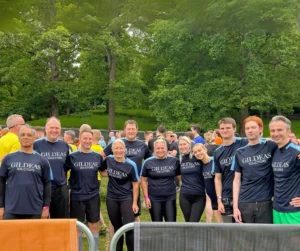
Our commitment to community work remained strong this year.
In June, a team from Gildeas took part in the Tough Mudder challenge to raise funds for Cardiac Risk in the Young, a charity carrying out vital work to reduce the number of young people who lose their lives to sudden cardiac conditions.
This cause was especially close to our hearts. Our fundraising was dedicated to the memory of Ashwin Bali, a young doctor who tragically passed away in 2024 from sudden cardiac arrest.
The team raised more than £6700 in his honour, and we are immensely grateful to everyone who supported us.
Looking Ahead
As we prepare for 2026, we do so with gratitude for the trust our clients have placed in us, pride in our team’s remarkable achievements, and excitement for the future at Gildeas.
We might have evolved, but our mission – protecting the injured, fighting for justice and supporting our community – remains the same.
Thank you for being part of our journey.
From all of us at Gildeas Solicitors, we wish you a Merry Christmas and a safe, healthy and optimistic New Year.
Contact Gildeas Solicitors for a no-obligation chat today.
Claim smarter.
Get your FREE guide to personal injury claims!
Check out our related links:
Meet the Team at Gildeas Solicitors
Gildeas Solicitors is a recognised law firm specialising in personal injury claims, supporting you throughout Scotland from our offices in Glasgow and Edinburgh. We’re passionate about what we do, whilst putting our clients’ interests first. That’s why we make personal injury personal.
Considering our services? Call our dedicated team today on 0141 331 6070.